About the heroine of Moon of the Goddess

I never liked Helen of Troy. She seems so helpless. Homer and others portray her as beautiful, yes, but to me she seems egotistical, self-centered and weak. So when it occurred to me that a kidnapped princess was a good place to begin a story, I set out to describe a  very different young woman than Helen.

Yes Thalassai, the heroine of my novel  Moon of the Goddess, is pampered, and lives sheltered in a palace, but as she faces her fears and her kidnappers, she finds there is strength in her, and smarts. She becomes an instrument of her own rescue.

Sure there is a hero, her brother Melanion, who sets out to rescue her, and he has an important role. But the goddess who comes to her in secret opens her to her own strength. She grows into a beautiful and strong woman in the course of the novel.

You will have to wait a bit to read her story: the novel will be released by Prizm Books on November 13th. Buy it online from them, or look in your local bookstore shortly after that. Or ask me and I’ll make sure you find a copy.

Posted in Moon of the Goddess | Tagged , , , | Comments Off on About the heroine of Moon of the Goddess

Ariadne, Theseus and the Minotaur

When I offered to do some story telling at a day camp about the gods of Greece. I was asked to tell the story of Theseus and the Minotaur. On a day when the theme was monsters, you could maybe call the tale “The minotaur and Theseus”, but that day was about heroes, and this story has two heroes. Ariadne belongs in the title. Just listen.

All Theseus did was get himself locked into a cell on Crete. I admit, it took courage to get there. He chose to put himself among the sacrifices from Athens. When the message came from King Minos of Crete that it was time to offer 10 young men and 10 young women as punishment for the death of the prince of Knossos, Theseus offered to be one of the men. That took guts. He put his life on the line. His hope: to free his city of this curse once and for all.

But all he did was get himself locked into up with no plan for defeating the minotaur. Sure the king had given them a room with soft cushions and plush sleeping rugs, but it would be the cell that held them captive until the day they were sent into the labyrinth for the minotaur to kill. Theseus had courage. When the other seventeen collapsed into fear-filled sleep, he ignored the paced the floor trying to think of a way to defeat the minotaur. How could he find his way in, and then back out of the labyrinth. And with no weapons how could even a strong warrior match a beast with the power of a bull and the brains of a man.

In the middle of the night, Theseus heard the rasp of metal on metal. The door opened to reveal a woman with a torch. The daughter of the king of Crete put a finger to her lips, then beckoned him.

Curious, he followed her out of the room. When she locked the door again, he objected.

“No one must know you left,” she whispered. “Come.”

“I will not run away,” said Theseus. He had met her eyes in the feast several times and thought perhaps she was making a way for him to escape.

“I am guiding you to the minotaur now. This is your one chance to defeat him.”

Theseus followed the princess through the corridors of the palace “How do I find my way to the minotaur?”

A tiny smile curved the corners of Ariadne’s mouth. “I am glad you did not ask how to find your way out. You may have enough courage for this.” She glanced at him and increased her pace as they left the palace and followed a path through the gardens. “The way in is easy: follow the roar of the beast.”

“They took my sword, as you well know.” Theseus looked at his hands. “I am strong, but for a man-bull?”

Ariadne pulled a sword from beneath her cloak. She handed him the blade hilt first. The sword fit his hand, and he swung it through the air.

“This is the blade I received from my father,” he said. Finding the sword had been an event in itself, but it comes in another story.

“Of course it is,” said Ariadne with a touch on impatience. She led the way through the city gates and down a long hill. She stopped beside a gap in a solid stone wall. Cold poured from the dark corridor.

“If…,” said Ariadne. She stood tall and looked directly into Theseus’ eyes. “Unwind this thread as you enter the labyrinth, and I will hold the end. When you defeat the minotaur, follow the thread to find your way out.

Theseus looked into the eyes of this beautiful and courageous princess. Love for her beat in his heart. He would return to her, he told himself. First, he must defend his people by defeating the beast.

Unravelling the thread as he went, he stepped into the maze. He felt the roar of the beast through the leather of his boots.  At the first split in the corridor, he took one step to the right and waited. The roar came from behind him, so he returned to the junction and took the other turn, carefully unravelling the thread with each step. At the next split, he took two steps to the left. The roar of the beast was in front of him. He walked toward the one who made the horrible sound.

Deeper into the maze he travelled, and the minotaur’s roar grew till it became a blast of wind on his face. Carefully, he unravelled the thread, certain that Ariadne held firm the other end to guide him out. The walls vibrated with noise the monster made, then the sickening smell of the beast filled the air. He felt the wall and knew the corridor had opened into a chamber.

Theseus placed the spool of thread securely in a crevice in the rock. Then he stepped into the black chamber. The beast snorted. Its feet pounded the stone. A press of air told Theseus that he approached. He jumped aside, and the beast rushed past, roaring in fury that it had missed its prey. Again, Theseus felt the pounding of its feet and the gust of air. Again, just as the beast reached him, he slipped aside and the beast rushed past.

Now, Theseus had a plan. This time, when the bull-man raced toward him and he slipped to the side, he plunged the sword deep into the neck of the minotaur. He jerked the sword free, and the beast screamed in rage and pain. It turned quickly to attack him again, but again, Theseus slipped aside and plunged the sword into the beast. Once more the beast turned. Rage gave it strength as it pawed the stones. The smell of blood and the beast filled the cavern. Theseus felt it come toward him, and one more time he stabbed. The beast fell to its knees and crumpled to the floor.

Theseus’ chest heaved as he gathered his breath. It was time to leave, but where was the exit. Slowly, he walked to the cavern wall, and carefully he felt for the place he had stowed the spool. He began to roll up the thread, following it back through each confusing turn of the labyrinth.

Finally, he saw a tiny light like a star at the end of a long corridor. There Ariadne waited, with a torch in one hand and the end of the thread in the other. Despite the stains of blood on his tunic, she embraced him.

“We must hurry. You and your companions must take ship this very night. My father will rage,” Ariadne said.

At the shore, Theseus declared his love for Ariadne and asked her to take ship with him, but here a mist descends upon the story. Some say the Athenians slept on the beach by their ship waiting for dawn and the princess’ return; that the goddess Athena came and told Theseus to sail off immediately without Ariadne. Some say that Ariadne took ship with Theseus, but when they stopped to load their water jars at a nearby island, Dionysius saw her and deceived her into taking a cup of his concoction to make her forget Theseus and cling to the god. But, I have also heard it said that when Theseus begged Ariadne to come with them, she said this:

“I cannot abandon my people to the rage of my father. I must stay and come between them and the anger that will explode when he discovers his pet is dead. Each day, I will push him toward a more just use of power, but one day, when he is frail or gone, I will rule this land in his place. That day there will be peace in Crete.”

Theseus honoured her choice and took ship with his companions. But he mourned the sweet, wise, gentle Ariadne. His sadness made him forgetful, so that they sailed into the harbour of Athens without changing the sail from black to white, the sign they had been instructed to give if they survived.

The king of Athens, overwhelmed with sorrow at this sign that his son had been taken by the minotaur, threw himself in the ocean. So when Theseus and the others disembarked, the city was torn between sorrow and joy. Theseus mourned the father he hardly knew and  became king of Athens on that day.

Posted in Old Greek Stories retold | Tagged , , , , , , , , , , , , | Comments Off on Ariadne, Theseus and the Minotaur

Practice with poetry

We have all read “smart” poems, the ones that work an established form effectively or present a well-crafted metaphor. Then there are those with a good message that we can read on appropriate occasions. We approve of these poems.

But when we read a poem where the form serves the metaphor, where the beat of the rhythm speaks but draws no attention to itself, where rhyme and alliteration slide into the reader’s heart and mind, that poem is powerful. The skills of the poet slip out of sight, and the poem works.

We story-tellers need to learn to work as hard as poets. Too often, we put the structure of the tale—the need for a red herring in a mystery or a glitch in the new technology in sci-fi—right there on the surface for all to see. Metaphors are thrown in to liven up a boring scene, and symbols are placed like streetlights where we cannot miss them. The tools of the trade become a gaudy frame that it is hard to look past.

The best stories, the best chapters in our novels, are the ones where the symbol has become the form, and the twist in the plot is also a metaphor. In the tales that work, dialogue is not just set in place like lines in a play script, but speaks with the voice of the character. These are the stories where the tools become the window we look through to see the world the teller imagined for us.

So those of us who want to write stories, should practice writing poetry. Talk to a poet or three about how they sublimate the tools of their craft into the poem. Read poetry, not just the epic story-telling kind, but the haiku that captures a moment. Write poems to practice attending to rhythm and sound. Then come back to the story and craft each scene, each sentence, each bit of dialogue, like a line of poetry. True, there is a limit to how much time we have to devote to each chapter of a long novel, but the time we spend will pay off in a story that comes alive.

Posted in The nature of story | Tagged , | 5 Comments

I love the way storytellers today pull us into the perspective of different characters. From George R R Martin with The Game of Thrones to Maggie Stiefvater in The Scorpio Races, the author shifts perspective from one main character to another, in different chapters, letting us see events through different people’s eyes. While shifts in point of view mid-scene are confusing, turning the story like a crystal in sunlight sheds light on what would otherwise remain a mystery.


The narrative style that puts us into the skin of only one character shows what the events mean to that person. We understand how this person is affected by what happens, what they fear and the nature of their dreams. When we can see the same landscape from the perspective of another person’s dreams and fears, the texture is deepened, and we travel into corners of the terrain we would not otherwise enter.


Because each person carries different baggage, has their own set of commitments, standing at their shoulder lets the reader explore their investment in the events. The storyteller shifts the colours on the rubiks cube for us.


Especially powerful are the moments we are placed inside the skin of a character we do not like. Don’t get me wrong: I do not want to be made to feel and think with someone truly evil. But there are people who put me off, folks in the story I find obnoxious. Making me understand the texture of their reality by placing me where I can see what they see balances the way I cheer for the heroine or hero, broadens my sense of what is really at stake. 


As an author, we can let the reader do all the work, make them imagine the story from different perspectives for themselves. But if we as the storyteller have never seen the events from the perspective of more than our main character, the secondary people will be shallow, empty of deeper dreams and thoughts. It is useful to write some parts of the story from the perspective of other characters even if we never put them in the book.


And, forgive me the digression into life: although we can never see from another person’s perspective, imagining what they see in the crystal of life, what they dream of for the tapestry they are weaving, deepens our compassion for them and teaches the limitations of our vision.


Whether we all like this style of writing or not, stories and lives are more like a crystal turning slowly in a beam of light than a paved highway or a brick wall.

Posted on by cathyhird | Comments Off on Perspective

Image

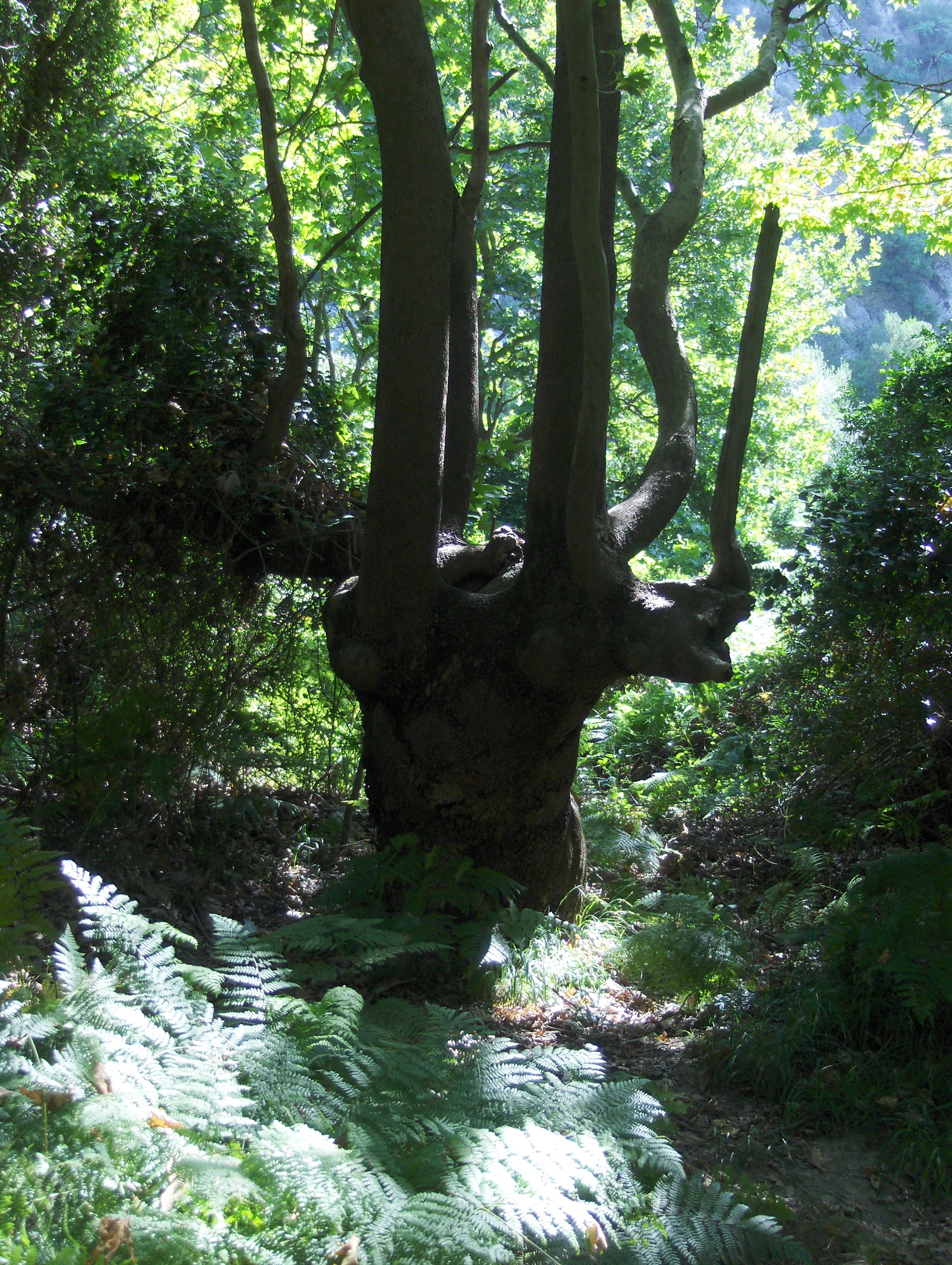
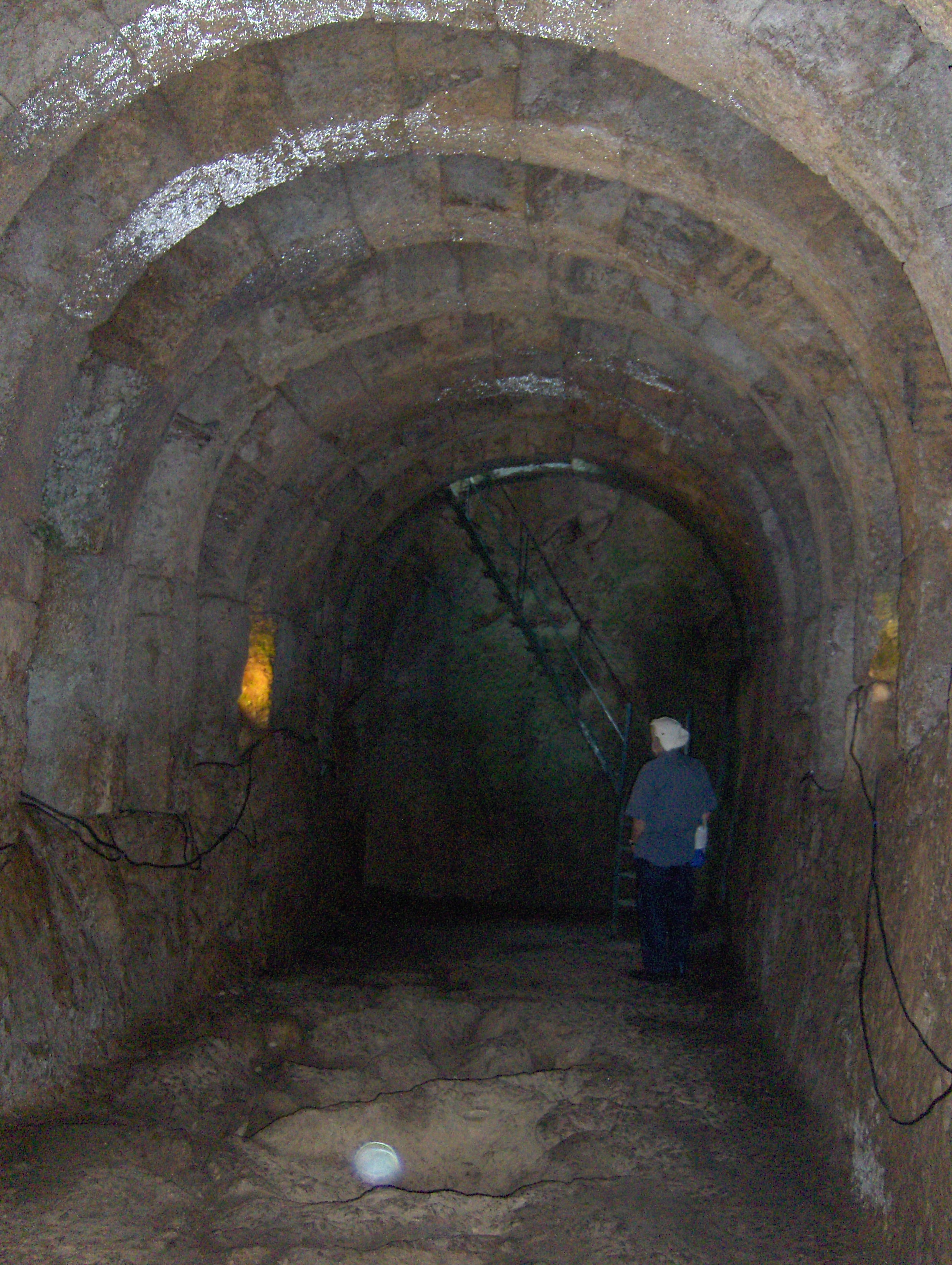
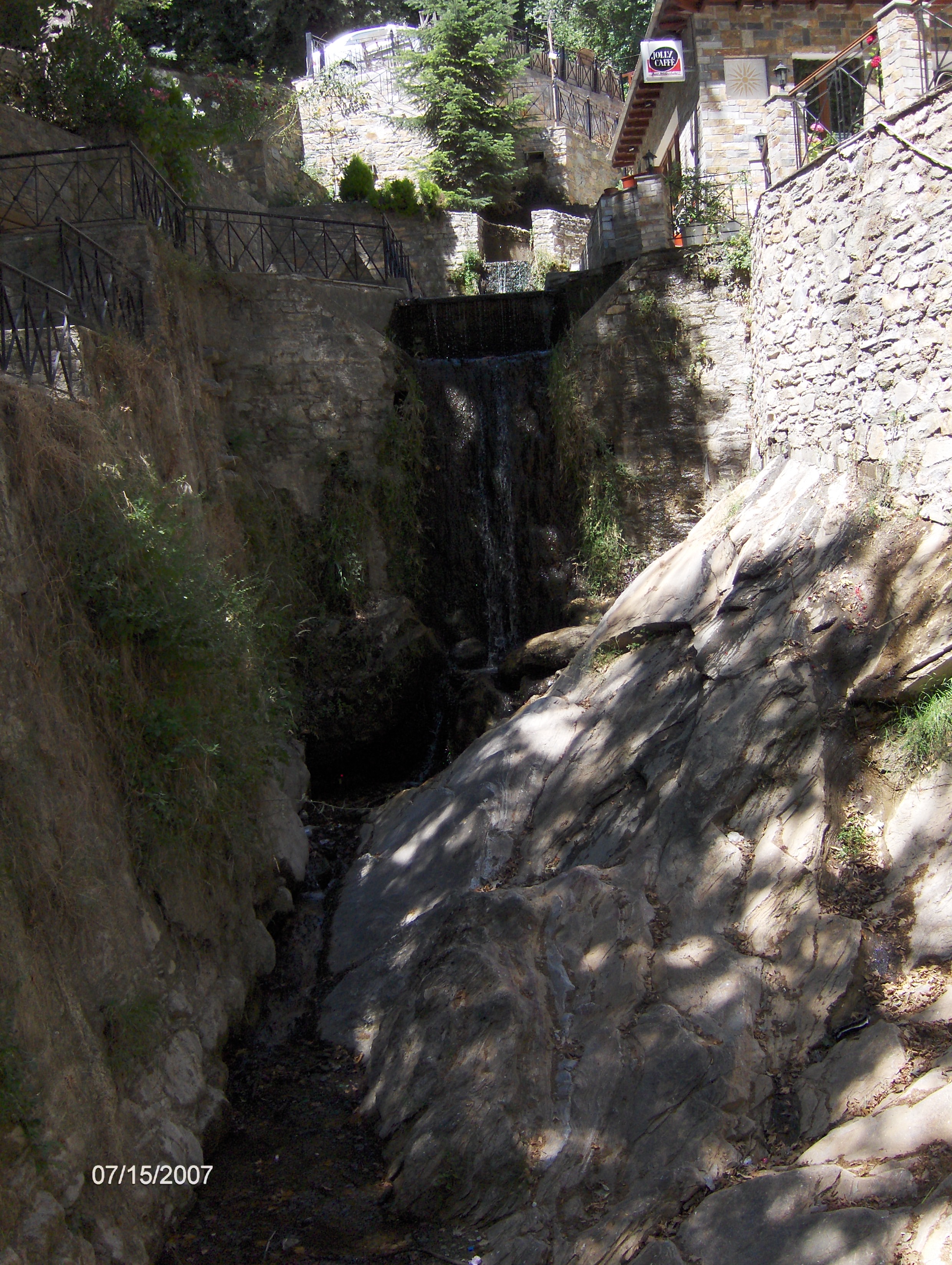
There are some places in the world where stories are waiting just under the surface, behind a tree, under a rock. Greece is such a land.Image

 Postcard photos of the Parthenon or the many theaters of ancient times have a story to tell, but here are some pictures of places and trees and water that inspired my writing. Here is a glimpse of the places where  my novel Moon of the Goddess, due out later this year, is set. 

 Image

 And one photo of Makrinitsa on Mount Pelion, a place I will return to one day for the story of a centaur and a girl who.. .

Image


Posted on by cathyhird | Comments Off on Places that inspire a story

Stories don’t need to be disinfected

 Recently, for work associated with my day job, I compared four similar stories. Scholars interested in “real” history argue that these reflect two separate events. What interested me most is that the two different strands were woven together in the fourth story.


Which story are am talking about? In each of the four gospels there is a story about a woman anointing Jesus. In all of them, an expensive perfumed ointment is used, but in Mark and Matthew his head in anointed, and in the other two his feet are carefully, gently rubbed with the perfumed ointment and wiped with the woman’s hair. In all of them, people around object, but sometimes it is to the waste and sometimes to the fact that he let a woman known to be a sinner touch him.

HPIM0477

What is most interesting is the way the two sets of themes are woven together in John’s gospel. John tells of Mary the sister of Lazarus, rubbing nard into his feet after washing them. The picture of a woman kneeling with her hair loosened is similar to Luke’s version. But instead of following Luke into a discussion of forgiveness, John follows Mark and Matthew into an objection to the waste and an instruction to care for the poor.

History-oriented scholars dismiss John’s version because he let the other two stories interact. John has blended them, thereby masking the true event, it is argued.


But isn’t that what stories do? They speak to the listener. They interact with the reader. Stories, even holy stories, are interpreted. That’s how we gain access to the meaning of the story. Finding the fingerprint of one story on another is interesting. Noticing the way a story touches us is powerful. Reaching out and changing the reader and the world is what good stories do. So why wouldn’t a good story also change the stories we tell?


In flu season, we go around washing our hands so that we don’t pick up germs. We wipe down doorknobs and bathroom taps to get rid of other people’s fingerprints, afraid we’ll get sick if we let what they left touch us.


But let’s not do the same with stories. Stories don’t need to be sanitized, stripped of the influence of every story teller as if when the layers are gone we will find an original core. When we do that the story is gone.


Although, if it started as a good story, the germ that is left may enter our imaginations becoming the seed of something new.


Posted in The nature of story | Tagged , , , , , , , , | 2 Comments