The heroine of Moon of the Goddess

I never liked Helen of Troy. She seems so helpless. Homer and others portray her as beautiful, yes, but to me she seems egotistical, self-centered and weak. So when it occurred to me that a kidnapped princess was a good place to begin a story, I set out to describe a  very different young woman than Helen.

Yes Thalassai, the heroine of my novel  Moon of the Goddess, is pampered, and lives sheltered in a palace, but as she faces her fears and her kidnappers, she finds there is strength in her, and smarts. She becomes an instrument of her own rescue.

Sure there is a hero, her brother Melanion, who sets out to rescue her, and he has an important role. But the goddess who comes to her in secret opens her to her own strength. She grows into a beautiful and strong woman in the course of the novel.

Here is how she begins in the story–but I promise she is more courageous by the end:


Thalassai floated in a small boat among fragrant lilies. She reached out to touch one of the delicate white blossoms and saw the reflection of her face on the mirror-like water of the pond. One strand of hair had escaped her braid. She pushed it back, then trailed slender fingers through the sun-warmed water. The ripples grew, and the pond became a river. Water tumbled around a rock, making the boat bounce. She grabbed for the gunwale and could not reach it. The boat tilted sideways, threatening to throw her into the now-rushing river. Water poured over her face, filling her nose and choking her. She awoke.


“Diakonia, I just had the worst dream,” she said to her maid as she opened her eyes. Darkness pressed down on her.


Thalassai pinched her eyes closed. She must still be dreaming. The lamp could not have gone out. She counted to five, extending one tight finger after another, working to control the panic that crept into her throat. “The lamp is burning, and Diakonia is still sleeping,” she whispered. She opened her eyes. Darkness enveloped her like a blanket. She raised her hand to her face to push the dark away. She struggled to breathe.


“Diakonia, the oil,” Thalassai whispered. “You let it run out. Come!” There was no answer from her maid. She moved to sit up, and her head swirled. Thalassai lay back and waited for the spinning to stop. Her chest heaved as she drew quick breaths. Too quick. She would faint if she kept this up. She strained to see the shape of the lamp, the chest by the wall of her room, something. “Diakonia,” she called, trying to push her voice through the impenetrable darkness.


Thalassai told herself she was too old for this, that the darkness would not smother her. She tried to draw in air slowly, but her throat seized. She needed help just as she had when she was small. She could recite the litany her nurse had taught her so many years before to calm her fear. She did not need to panic.


“With each breath in, I lift the night away with my chest. Now, I blow the darkness away with my breath.” Thalassai felt tears running across her temples. “Again, I push the dark away with my chest, then with my outgoing breath.” She forced herself to continue. “The dark will not smother me. I will breathe in and with the air; I take in a piece of darkness and make it part of me.”


Thalassai did not want the darkness inside of her. She held her breath. Nurse used to remind her that she could not do that for long. Soon, she would have to breathe, let in the dark. “I am an adult now. I am not afraid of the dark,” she whispered. She did not believe her own words.


“So taste the dark; see what it teaches you.” It was her brother Melanion, who had told her that. Her brother always told her she was stronger than she thought.


More tears fell, wetting her cheeks. She opened her mouth to taste the air. There was a hint of salt, like the sea she was named after, but this salt came from her fear-filled tears. “That did not help,” she whispered to her brother who was not there. “I already knew I was afraid.”


Melanion would laugh if she said that. He would tell her a story about something fearful he had faced. “Even you, Thalassai, facing such a moment, you would discover strength and courage,” he had said so many times. Thalassai held on to the picture of her brother laughing beside her bed. She would be strong. She would figure out what had gone wrong with the lamp. She pulled herself to a sitting position and curled her legs beneath her.


Little lights swirled in front of her eyes. Her head spun, and the bed seemed to move up and down like the boat in the dream. She put her hands down to steady herself and pulled them back as if they burned. This could not be. These were not the silken sheets of her bed! She reached down with her right hand. The bed linens were rough like the ones on the ship when she traveled with her father to visit Athens and Corinth. But she was in the palace at Tiryns, wasn’t she?


“Diakonia,” she whispered, though she knew now that her maid could not hear her. She placed her hands on her lap so she would not have to feel the bedclothes, but she could not escape the gentle up and down, the rocking motion of a ship at anchor. How had she gotten onto a boat?


You can buy the book from Prizm Books (http://www.torquerebooks.com/index.php?main_page=product_info&cPath=83&products_id=4071)  or a paperback from Barnes and Noble

Posted in Moon of the Goddess, Old Greek Stories retold | Tagged , , , , | Comments Off on The heroine of Moon of the Goddess

A story has to have horses in it

A good story has to have horses. Beautiful, strong, smart horses. Horses that love the hero and heroine.

As a teenager, I devoured stories with horses. My favorites were the Black Stallion series. In the first book, an accident throws a gawky kid and a powerful Arabian stallion together.The love that develops between Alec and The Black is powerful and enduring.

When I wrote a novel, it had to have horses in it. Although the ancient Greeks relied on boats, the plains of Thessaly were home to magnificent horses. The hero of my first book turns to his beloved stallion to race against time and rescue his kidnapped sister.

J. R. R. Tolkien reminded us that horses cannot travel underground, so in the story, when the hero takes a path under a mountain to the edge of Hades’ kingdom, his stallion has to travel another route. Don’t worry; they are re-united for another adventure in the sequel I am working on.

Beyond the sequel, I am working on a story with centaurs, which will require a horse or two. The other novel I am working on set in modern day rural Ontario has a motorbike, but I’ll get a horse in there before I am done.

moonofthegoddess

Posted in Moon of the Goddess | Comments Off on A story has to have horses in it

Why care who rescues you?

Curiously, my post called “Who would you choose as a rescuer?” has had more attention than any other. Some of the comments are spam, but still.

One basic question is: if you need rescuing you take whoever comes first right? Well, I am not sure. What if a zombie or a vampire is the first to come by? Or let’s say you are hanging over the edge of a cliff calling for help and you hear a voice, “Let go and I’ll catch you.” “Who are you,” you ask. “God. Now let go so I can catch you.” The way I’ve heard this tale end is that the next thing the person hanging on for their life says is, “Is there anyone else up there?”

Okay. So now my tongue comes out of my cheek. But still, being rescued initiates contact, begins a relationship. Jesus told a story of a man beaten and left for dead at the side of the road. One priest and then another walk by and don’t help–these are the ones you would expect to help. Finally, a Samaritan, someone despised by the community, someone who the injured man would normally avoid rescues him. Jesus concludes that we are to be like the despised Samaritan not the religious leaders.

Sometimes I ask people to move the story to our day so that they can get a feel for it. When I ask who they would expect to help the answer is paramedics, police, a doctor. When I ask who they would not expect to stop, the answers are: a homeless person, a goth teenager, a terrorist. This generates a bit of discussion about prejudice and categorizing people. So then I ask, what if it is a person with AIDS; would you want them to help. That’s when people hesitate. They want to say, it would never happen, but they look at me and see themselves needing help and accepting it from someone they would hesitate to touch in every day life.

Accepting help is not always easy. Accepting help always establishes a connection, a debt if you will, but a relationship. So chose your rescuer wisely, or be prepared to enter a whole new community when you accept unexpected help.

Posted in biblical stories, Building change with story | Comments Off on Why care who rescues you?

Voss Foster on Dragons and his new book

Zerga tossed the flask on the table. “You have what you want, Dragon, now go.”

 “Not just yet.” She stepped out of the table and grabbed the flask. Solidity crept up her fingers, enveloped her arm, coursed through her until the last of the dim, semi-human form disappeared. She had cappuccino-colored skin, a thin, short nose, and a shaved head.

 She slipped her flask into a harness on her belt. “Who is this?”

 “He’s just an artist,” said Zerga. “He wasn’t even supposed to be in here.”

 “I don’t believe that. You wouldn’t let just anyone hear this.” She waved her hand and Harlan dropped. “No, there’s something special about him.” In a flash, she had her hand at Toby’s shoulder, pressing him into the wall of the van. “What is it?”

Taken from Zirkua Fantastic

Dragons are one of the most pervasive legends worldwide. Almost every culture has some sort of dragon, from the Aztec Quetzalcoatl and Huitzilopochtli to St. George’s conquest and, of course, the dragons of China.

In China, dragons’ kept things running right. Not, you know, toasters and such. The oceans. The sky. The rivers. Nature. Dragons’ were guardians against chaos, there to keep the global status quo in check.

So, it’s really not hard to see how I got from these great, noble lizards to Dragon, the spirit of order, present since the dawn of time to keep everything and everyone in check. The balance of King Jester. I brought in a little bit of a dragon motif, with her fangs and scaled coat and, of course, her summoning little miniature dragons. Her flask is also covered in dragons, although that’s only mentioned once or twice in the whole series.

As with King Jester, I wanted Dragon to look less human than the other immortals. They were the first after all. King Jester was more subtle, his appearance changed by the mask. Dragon was a bit more striking. Bald, tall, slender, and the fangs. She needed to look almost monstrous… but not.

How does Dragon’s story play out? Find out in The Jester Prince, Book Two of the King Jester Trilogy.


thejesterprince (1)


With the destruction of Zirkua Fantastic, King Jester, the spirit of discord, has been unleashed once more upon the Earth. Only Toby, a fresh, untrained immortal, and the other former members of Zirkua Fantastic dare to stand against his chaos. But their hold is tenuous, and they are only truly safe from his power within the bounds of their camp. King Jester grows more powerful and more dangerous with each passing day. But he’s made one mistake. That mistake could be his undoing. He’s stolen Toby’s soul mate, Marley. When he discovers Marley’s location, Toby knows what he has to do. He will rescue Marley, even if it means he has to face King Jester alone.

But the others don’t let him go at it alone. Marley has information about the resistance. They can’t afford to let him stay in King Jester’s control. In desperation, the immortals raise an army to storm the compound. But will it be enough to challenge the embodiment of chaos himself? All they can do is hope. Hope and put their faith in love.

You can buy the book through this link: http://www.torquerebooks.com/index.php?main_page=product_info&cPath=83&products_id=4250

EXCERPT:

“Why do you need her? She hasn’t done anything for two weeks.”

“That’s why I need her. I want her to do something. Anything, really. She’s going to go insane at this rate. Actually insane.”

Before he could respond, Dragon slumped into view. She no longer carried herself with the air of nobility, not like the first time he had seen her. A cold pit formed in his stomach when he looked at her. He took a step closer to her and Zerga.

Glaring, Dragon sighed. “What?”

“I want you to teach Toby to fight.”

She looked him up and down, eyes dull, and shook her head. “I’ll just cause more problems for him.”

Zerga placed a hand on Dragon’s shoulder. “I certainly can’t do it. Never been worth a damn at that sort of thing.”

“Then get Feren.”

Toby took another step forward. “I’d be afraid to learn with Feren.” Looking at Dragon broke up the stones in his gut. If she’d been statuesque and stoic, the way she should have looked, the way she still looked in his nightmares, he could have hated her without difficulty. Things could be right. But he couldn’t. Her part in Marley’s kidnapping and the loss of Toby’s arm had shattered some part of her. “I’m sure it won’t take long.”

To read more from Voss, check out his blog at: http://vossfoster.blogspot.com

Posted in Uncategorized | Tagged , , | 1 Comment

A new book by Voss Foster

One of my colleagues has just published a novel with Prism books. He’s  on a blog tour talking about the book, and will visit here next Thursday. You can meet up with his tour between now and then by checking out any of the following blogs:

Wednesday, August 13th: Voss Foster: Demon Hunting and Tenth Dimensional Physics (http://vossfoster.blogspot.com)

Thursday, August 14th: Siana Wineland: Siana’s Place (http://www.sianawineland.com/)

Friday, August 15th: S.Evan Townsend: Writer’s Thoughts (http://blog.sevantownsend.com/)

Saturday, August 16th: Iyana Jenna: Iyana Jenna (http://iyanajenna.com/)

Sunday, August 17th: TR Goodman: trgoodman.net (http://www.trgoodman.net)

Monday, August 18th: T. Strange: T.Strange (http://tqstrange.blogspot.com/)

Tuesday, August 19th: Frances Pauli: Speculative Friction (http;//francespauli.blogspot.com)

Wednesday, August 20th: Jennifer Willis: Jennifer Willis (http://jennifer-willis.com/)

Thursday, August 21st: Cathy Hird: Open One More (https://openonemore.com/)

Friday, August 22nd: J.J. DiBenedetto: Writing Dreams (http://writingdreams.net/)

The book looks very interesting. Take a look at the cover:thejesterprince (1)

Posted in Uncategorized | Tagged | Comments Off on A new book by Voss Foster

Why I didn’t make Poseidon a hero

Thanks to Rick Riorden and Percy Jackson, I get into trouble when I tell kids that Poseidon is not the hero in my novel. In Riorden’s version of the world, Poseidon is one of the good gods, so this generation tends to like him. They give me the “you-better-explain-fast” stare when I say that in Moon of the Goddess, he is the agent of chaos.

My justification begins with Homer: he called Poseidon “Earthshaker.” Earthquakes cause major disruption, and so as the god who makes the earth shake he is the agent of trouble. He may sometimes help humans, but he also causes major headaches even before we talk about ocean storms.

The real issue in my novel is that it is set way before Homer wrote at the time when the land was moving away from a rural centred society to an urban one. Cities still depended on food that was grown around them, but in Greece they became focussed on trade and the development of craft. They became ambitious, and war erupted between them.

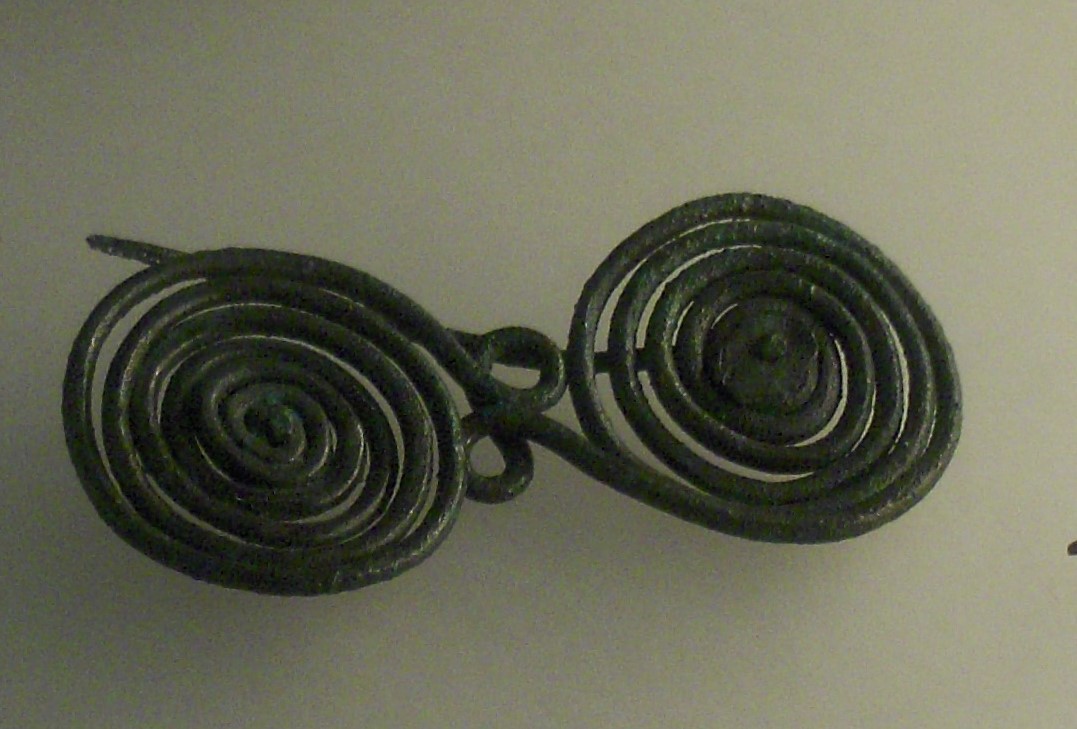
There was all through the Mediterranean and in Greece an ancient goddess tradition. It is the goddess, and the moon, that mark the flow of life for the farmer. We can visit the large pre-Olympian goddess shrine in Didome, in northern Greece. In every museum, collections of bronze age artifacts include feminine images and jars and jewelry marked with spirals.HPIM0263 - Copy (2)

The Olympians made sense to the classical Greeks, and the goddess made sense to the earlier farmers. So what happened in that time when the cities began to grow? This is the cause of the tension between the creation goddess Eurynome and the Olympian Poseidon in my novel Moon of the Goddess.

Eurynome is not angelically good, she is just rooted in the land. Poseidon is not evil in the story, he is just as ambitious as the kings of the great cities. Not all conflict is about good and evil, and even a villain has to have a fully developed character–but more on that another day.

Posted in Moon of the Goddess, Old Greek Stories retold | Comments Off on Why I didn’t make Poseidon a hero

Why Tweet

In my day job as a protestant minister, writing is interactive. I know my audience, so as I prepare, I often have one or two of them in mind. I know the basic shape of their lives and  easily and which will have to be explained. Though I write the sermon in private at home, the audience is always in my mind. When I deliver the sermon, the reaction affects the way I read it, and sometimes changes the text. After a service, people will sometimes engage in an in-depth conversation about what I wrote.

Fiction writing is a lot more solitary. I have no idea who the audience is going to be; I don’t see them reading it; I don’t get comments back. Once a month I will take one piece of a story to a writers group. There I finally get to hear whether the character’s action made sense, whether the setting is believable, whether the arc of the story is interesting. The discussion tends to be technical, but at least I hear a little of what people think of what I wrote.

I started a Twitter account because my publisher told me that an on-line presence will help sell books. What I discovered was that I could get a quick reaction to my thoughts. If I got “retweeted” or “favorited” my words touched a nerve. If my blog get a visit, I knew my words resonated. When I ran across a tweet that expressed something important or at least interesting, I would retweet it, perhaps comment on it, and if I then got followed, we were into a conversation. What I discovered was a quick way to learn what burning questions are on folks minds right now.

Yes, there is lots of promotion on twitter. Yes, there is stuff to avoid and lots to filter. Yes, you can spend all day there. But in a kind of work that can be isolated, it is a way to connect to other people, to hear a response and learn what resonates. Not that I am going to change my writing by what I see this moment on Twitter, but the ancient craft of storytelling was interactive, and tweeting is one way to recover that.

Posted in The nature of story | Tagged , | Comments Off on Why Tweet

Talking Greek heroes and heroines with V. L. Locey

We often focus on the gods; who is your favorite hero or heroine?

V. L. Locey: So many choices. While I enjoy reading about Heracles and Theseus, I have to say my favorite heroine from classic legends is Atalanta. Sure, the guys killed lots of monsters, and you know, we`re all thankful for that, but the tales of Atalanta were particularly inspiring to me as a young girl reading those timeless stories. A virgin huntress, favored by Artemis, who was suckled as child by a she-bear? That is pretty awesome stuff right there!

If I had to choose from my own works, it would be Libby Simons, the heroine of my Gods & Goats trilogy. Libby is a mortal woman who finds Ares lying in her goat barn one day after a violent thunderstorm. From that moment on, her pastoral life in the mountains of Pennsylvania raising dairy goats is never the same. She is tossed into a battle with Hades and his minions with the fate of the Greek pantheon, as well as the world, up for grabs. Libby proves to be one hell of a warrior, friend, heroine, and lover for a certain battle god. What? You thought I would choose some other god as my leading man? I adore Libby, her strength, her character, her loyalty, and her spunk.

Cathy: I mentioned Ariadne the other day. I love the way she defies her father, saves the Athenians and frees her own people from the threat of the minotaur. She is smart and courageous, even though ill fated. Some tales say that Athena prevented her from leaving with Theseus; others say that Dionysius stole her away from the hero; all agree that she did not get back to Athens with him.

One of the sets of stories that fascinate me are set in Delphi. The women priestesses are touched by Apollo to speak hints about the future. These hints often get misinterpreted by the kings who are so jealous of their position, but that is not the priestesses’ fault. It is also interesting that during the winter months the care of this shrine passed from Apollo to Dionysius, a reminder that emotion and intellect need to stay in balance. Someday I’ll tell a story set in Delphi with a dryad who watches over the pool where pilgrims wash before approaching the shrine…..There is a ton of material in the Greek stories, enough for a lifetime of inspiration!

If you`re interested in reading more about the Greek gods, check out our books:

Love of the Hunter By V. L. Locey

Of Gods & Goats  By V. L. Locey

Of Heroes & Hay Bales   By V. L. Locey

Moon of the Goddess  By Cathy Hird

Posted in Moon of the Goddess, Old Greek Stories retold | Tagged , , , , , , | Comments Off on Talking Greek heroes and heroines with V. L. Locey

Greek myths on TV and in movies, a conversation with V L Locey

These stories are retold on TV and movies today; which do you like? dislike?


V. L. Locey: I`ll admit that I am a huge fan of the Percy Jackson novels. Not only because it deals with my favorite gods and goddesses, but because Mr. Riordan has made Ares, Poseidon, Zeus, Athena, and all the rest cool again! He made mythology fun for kids. And those kids who fall in love with the legends, as I did as a child, will grow up and spread that love to others.


There are a slew of movies out, some good and some not so good. I enjoyed both Percy Jackson films although many didn`t. I also really liked the remake of Clash of the Titans, although for me, Harry Hamlin will always be Perseus on the silver screen. Again, the way Ares is cast in some of these films makes me twitch, but, at least he was getting some face time. I try not to be a nitpicker when the films deviate from the books or the classic legends. Sometimes it`s not easy, but if a movie can spark an interest in the Greek gods for someone, then all is good.


Cathy: Mostly I agree with you that anything that introduces these stories is great. Except right now we have this TV show Atlantis about Jason. I mean really? Slipped in from another dimension? Conflating Theseus and Pythagoras and who knows what else? I think this version is going to confuse everybody. And that Hercules is an insult to the hero, in my opinion.


I loved the Hercules TV show a few years ago, and Xena at the same time gave some exposure for the Amazons that was way overdue.


I too like what Rick Riordan did with the Percy Jackson story, and what he is doing in Egypt now. The idea that the gods and goddesses did not die is cool. The movies did the centaur Cheiron, a favorite character of mine, much better than the Hercules series. Kids really have gotten excited about the Greek pantheon thanks to him. I love listening to how many of the stories they’ve picked up.


If you`re interested in reading more about the Greek gods, check out our books:


Love of the HunterBy V. L. Locey

Of Gods & Goats  By V. L. Locey

Of Heroes & Hay Bales   By V. L. Locey

Moon of the Goddess  By Cathy Hird

Posted in Moon of the Goddess, Old Greek Stories retold | Tagged , , , , | Comments Off on Greek myths on TV and in movies, a conversation with V L Locey

Talking Greek mythology with V. L. Locey

Who do you hate, or at least dislike, but keep seeking out anyway?

V. L. Locey: Probably Hades. I think that`s because I chose him as the villain in my Gods & Goats trilogy and I can`t seem to shake the taint of his evil ways in those books. Also, I`m not real fond of how he treated Persephone.

Cathy: I do agree, though he ended up playing an important role in my first novel. In that story, the hero travels right to the edge of his kingdom. I also like the story of Orpheus and Eurydice where Hades does free the beloved woman, and it is the supposedly wise musician who plays the fool and loses her for good. Who do I dislike? Hera. She gets to be the wife of the guy in charge, but she is always doing nasty things. Jealousy drives her. Of course, Zeus does give her ample reason to be jealous.

This leads us to another question: neither of us heart the original poets tell these tales; how do you dig into these stories? And as an aside, have you heard it said that there were as many versions of the tales as there were poets who told them?

V. L. Locey: Ah, research. There are times that I find it a bother. I recently wrote a historical western, and digging up facts about old railroads and such was not exciting. However, you plunk me down to write something about the Greek pantheon and I`m all over that research! I suppose it helps to have a love affair with the topic that you`re working on. When I sit down to dig into something about the Greek pantheon, it`s no longer dry, boring research. It`s another exciting adventure with Perseus or Odysseus. I`m off to Thrace with Ares or waging war beside Achilles. I have an old, battered copy of Mythology: Timeless Tales of Gods and Heroes by Edith Hamilton that is my bible when I`m working with the Greek gods and goddesses. If I can`t find something in Ms. Hamilton`s book I`ll hit the internet, but nine times out of ten, Edith has it covered.

Image

Cathy: Richard Martin’s Myths of the Ancient Greeks sits on the table beside where I write. I have also gone to the writings of the classical era in Greece. Pindar, Hesiod and Homer have helped me keep an authentic texture to my writing. Homer often calls Poseidon “Earth shaker” and that became an important clue for my first novel. And of course I had to see the landscape I described. Travelling to Greece was the best research; I found an absolutely magical setting for Moon of the Goddess.


If you`re interested in reading more about the Greek gods, check out our books:


Love of the HunterBy V. L. Locey

Of Gods & Goats  By V. L. Locey

Of Heroes & Hay Bales   By V. L. Locey

Moon of the Goddess  By Cathy Hird

Posted in Moon of the Goddess, Old Greek Stories retold | Tagged , , , , | Comments Off on Talking Greek mythology with V. L. Locey