Talking Greek mythology with V L Locey

Today we ask what is your favorite story from the Greek legends?

V. L. Locey: There are a few. I always enjoyed reading about Heracles and his labors. I`m rather fond of the stories told about Atalanta. There aren`t many Greek myths that feature women beating men quite so handily and intelligently. Also, the story of Orion, Artemis, and Apollo. That one may be my favorite. I enjoyed it so much that I retold it in Love of the Hunter, in which I spun things around to have Orion and Apollo being the ill-fated lovers, and Artemis the jealous sibling. That book may be one of the novels that I am most proud of.

Cathy: I liked that you gave Artemis a role in that story.

I love the story of Ariadne—we often refer to it as Theseus and the minotaur, but it is Ariadne, daughter of the king of Crete, who feels compassion on the Athenians and sees that Theseus has a chance to defeat the beast. She is the one who comes up with a plan and implements it. The hero just wields the sword.


If you`re interested in reading more about the Greek gods, check out our books:


Love of the Hunter By V. L. Locey

Of Gods & Goats  By V. L. Locey

Of Heroes & Hay Bales   By V. L. Locey

Moon of the Goddess  By Cathy Hird

Posted in Old Greek Stories retold | Tagged , , , , | Comments Off on Talking Greek mythology with V L Locey

Talking Greek Gods with V L Locey


ImageThis week I am chatting with the author V L Locey about our mutual interest in ancient Greek mythology. The first question is:

When the name “Poseidon” is mentioned, kids jump into the conversation. What name from among the Greek gods/goddesses gets your attention? 

V. L. Locey: Ares. I am not sure why the god of war appeals to me as he does. Throughout the Greek legends he is portrayed as a less than admirable god, prone to bloodlust and following his baser desires. Just ask his brother Hephaestus about Ares and his desires, right Aphrodite? And yet, he is the god that appeals to me the most. I like to think it`s because he is always treated so poorly by his kin. I know deep down that Ares has some good in him, just look at how much he loves his children. And when he does give his heart to a woman it`s for keeps. Sure, he may have some slight jealousy issues. Okay, gutting Adonis while in the form of a massive wild boar may be a step above a slight issue, but that does not lessen the lure of the god of manly courage for me. Yep, Ares is my top god, war-torn hands down.


Cathy: Remind me not to get into a fight with you if you’re going to call on Ares to help!

Artemis is the one I am drawn too. Partly she has a broader character than some: she’s taken a vow to be a virgin but still acts as a mid-wife. I like that she does not impose her choice on other women. It is said that her temples centered around a pool of still water, and water always nourishes my spirit. Artemis never walked away from a fight for a just cause: when two giant sons of Poseidon are attacking goddesses, she leads them to their death to protect others—in that story, Hera just slipped away and left the giants to continue their rampage. Artemis will help out in the sequel to Moon of the Goddess. Her skills help out in the hunt for a creature that Poseidon let loose in the waters around Corfu.


If you`re interested in reading more about the Greek gods, check out our books:

Love of the Hunter By V. L. Locey

Of Gods & Goats  By V. L. Locey

Of Heroes & Hay Bales   By V. L. Locey

Moon of the Goddess  By Cathy Hird

Posted in Old Greek Stories retold | Tagged , , , , | Comments Off on Talking Greek Gods with V L Locey

Whose sacrificial giving: re-reading the story we call The Widow’s Mite.

Jesus and the disciples are sitting outside the temple in Jerusalem, and he points to a widow putting two copper coins into the temple treasury leaving her nothing to buy food. He compares her gift to what the wealthy contribute, and generations of preachers have interpreted his next sentence as praise for her willingness to give.

But just before this he warned his disciples to be wary of the scribes who make a show in public and “devour widow’s houses” covering their actions with long prayers. Right after he gives the warning, he sees an example of this kind of theft: by insisting that even the widow pay the tax, the religious leaders have effectively condemned her to starvation. The next thing he says is that the whole temple and its infrastructure will be taken down in judgement. (Ched Myers gives a convincing explanation of this passage in his book Binding the Strong Man)

We need to hear this story in context and realize that Jesus was angry at the way the social structure rewarded the wealthy and imposed hardship on those who already suffered. Rather than praising the sacrificial giving of the poor, he demanded sacrifice from the powerful and the wealthy.

Listen to the story again:

When Jesus came to Jerusalem, the leadership of the nation sent a series of people to him to test him. They hoped to trap him into saying something that would discredit him or allow them to arrest him. By speaking truth openly, he showed the hollowness of their position.

Then to his disciples he said, “You have to watch out for the leaders of our land. They make a show of religion, claim the best places in public and devour widow’s houses.”

He watched the wealthy make a big show of contributing to the temple, then pointed to a widow who put in two copper coins, one penny. “That’s all she had to feed herself! She has nothing more, but still the rich leaders insist she pay the tax. She paid for their temple with her life.”

He got up and left the place in disgust, but his disciples still did not understand. They pointed at the beautiful stones and structures praising it. “You still don’t get it,” he said. “God has judged this injustice. The whole structure is coming down.”

And then he continued on his path to build a new community of peace founded on justice.  When he was gone and the disciples started to lead the people in his way, looking after widows was key to their work.

Posted in Building change with story | Tagged , , , , | Comments Off on Whose sacrificial giving: re-reading the story we call The Widow’s Mite.

Why retell old stories?

Gandhi said, “Be the change you want to see in the world.” This feels important as I’ve also been thinking about how we move change from embodied in law to embedded in culture. As a storyteller, I’ve been pondering how the stories we tell can help this embodiment. So my next few posts will address retelling stories in order to push our thinking.

A young woman catches the name of an South Asian Dalit activist and stops to listen. She wants to understand the work he did to retell the history in order to ground a modern identity for her people.

A police officer in rural Ontario laments that high school women are showing up at the hospital sexual assault centre feeling guilty they were raped. “We need to redo the ‘No means no’ campaign again,” she said.

A 70 year old Tamil woman laments that the reaction of the media and politicians to a couple of high profile rapes in her country shows that the change she has worked for all her adult life has not taken root. “Will it ever?” she wonders.

News media are preoccupied with the story of kidnapped Nigerian girls generating anger around the world. In Canada, a few people ask if we would please get just as angry about the aboriginal women.

It is one thing to change the laws so that injustice can be prosecuted in the courts. It is another to change the culture so that the injustice does not happen.

Intellectual examination of the stories that ground our culture is valuable. The examination of that mythology can surface ideas we’ve missed, identify the ideas that ground current thinking. Stories reach into our hearts and imaginations, touch us in a different way. Stories can transform our thinking.

What I hope to do for a while here is to dig into the stories to surface aspects we have missed and then to retell them in a new, potentially transformative way. Greek and Celtic stories are the foundation of my fiction and important to our culture; these will be my focus. Christian stories are part of my vocation, and we’ll look at a few of those. Tomorrow, I’ll look at the story commonly referred to as “The Widow’s Mite.”

Posted in Building change with story | Tagged , , | Comments Off on Why retell old stories?

complex story

I don’t usually post sermons here, but this one was interesting because although it had a single point to make, the round about route and variety of images meant  those who heard it or read it reacted to very different parts of it. This reminded me that it is the same in the stories we tell, perhaps even the poems we write. It is true that some events or images may take us too far from the main arc of the story, but the richness of texture can provide a variety of entry points.

On another note, before I provide this particular sermon, my daughter often writes about what Chimamanda Nzozi Adichie calls “The Danger of a Single  Story.” Check out the blog “Unfinished Stories” at unfinishedstories.net to ponder the importance of telling complex stories about poverty and development.

But here is this sermon which I would not have given as an example of great preaching except for the way to reached the farmer and the intellectual, the activist and the contemplative…..I wonder….

There is a book that comes back up in popularity from time to time called In His Steps. It’s the story of a minister who challenges himself and his church to enter every situation asking, “What would Jesus do here?” It is a transformative experience for them to try to imitate the steps of Jesus.

Imagine going through a day doing what Jesus would do. We would talk to the person other’s avoid. We would speak with love not anger to the person who cut in front of us in the grocery line, or took our parking space or our promotion. We would speak of what we know of God’s vision and hope at a lunch break at work when the topic of the election comes up. We would take time apart everyday just to pray, to sit aware of God’s presence.

If we set out each day to do as Jesus would do, we would be like the followers Jesus described, the sheep who hear the shepherds voice and follow.

That isn’t exactly what my sheep do. When they are on the pasture and I call, they run away. So to get them to go to the barn, I have to get behind them and then shout. In the winter, when they hear our footsteps or our voices, they start to bellow, calling us to come and feed them. When we put down grain, they trample us to gobble as much as they can before the others get their share. As church people, we tend to be more like my sheep. We call on God to fix things for us. We demand our share of God’s help. We hide when God needs someone to take on the tough tasks.

Shepherding in Jesus’ day with the shepherd living among the sheep was a better model for discipleship. It was the shepherd’s voice that kept the flock together, where we use fences. The shepherd would move the flock from place to place for fresh grass and water. The sheep had to follow the shepherd. If we practiced listening for Jesus’ voice every minute of the day, if we watched for his footprints and followed them, we would act more like he would have acted; we would be better disciples. At least as far as our behaviour went.

Jesus’ followers were somewhat confused by what he said here. Part of that might be that shepherds were not admired in their day—they lived among their sheep, remember. They were thought of as unclean, in a rather literal sense. Part of it was the people still expected Jesus to point to the law of Moses, to show them how to do a better job of following the law. They still were not used to the idea that he was pivotal.

So they get even more confused when he goes on to say, “I am the door for the sheep. The sheep must go in and out through me.” Generally speaking, I agree with them that I haven’t got a clue what he is talking about when he says, I am the door; go in and out again through me. I know one of the standard interpretations of this line is that Jesus is the way into God’s family, but he says “you will go in and out,” so that interpretation does not quite cut it.

But I started reading Carl Jung on Alchemy as research for a story I want to tell, and he talks about the dangers of our modern, protestant way of imitating Christ. We think that we just need to do as Christ would do, act as Christ would act, but that puts the religious transformation outside us never touching our inner spirit or mind.

What would it mean to think as Jesus’ would think, to feel as Jesus would feel?

Obviously Jung is more interested in our psyche, what goes on inside our heart and head, but it occurred to me that this might help make sense of what Jesus says here. He is the door to go in and out; he is the path to change our actions and heal our spirits.

If we think about forgiveness, this makes sense. If we say, “I forgive you,” the person who hurt us feels better and senses that the relationship is restored. But if we do not feel the forgiveness, if we hold on to the resentment, the hurt, the relationship is not restored. We might hide it from the other person for a while, but the feeling we hold on to will poison the relationship. On the other hand, if we just let go of the hurt inside us and never tell the person we forgive them, they will keep their distance from us. We have to find the feeling of forgiveness and express it; we have to do both the inner and the outer work.

It is the same with anger. It matters if we speak in an angry way, but it also matters if we feel anger but speak in a loving supportive way. If we hide really well, the relationship may be fairly whole, but our inner self will be torn by the discontinuity.We need to deal with the anger not just bury it.

A modern therapist might say we should express our anger, let the other person know we are angry, get it out. But I don’t think that is what Jesus modelled; that just makes the other person responsible for our emotion. Instead, we need to see what it is in the world that makes us angry and understand if it is wrong or if we are hurt by something because of our own pride or desire. If it is wrong—as the tables of the moneychangers in the temple were wrong—we do something about it. If it is our own pride, we deal with our pride. We address what is outside us and what is inside us in order to find the path away from anger to love, in order to find healing and wholeness.

For Jung, the path to healing means holding together the opposites of good and evil, which are real. It takes a kind of crucifixion. For Jesus, the path to love and servanthood required the crucifixion. For Paul, the path to life in Christ required that he be crucified with Christ. To live in God’s grace, to live the life of Christ, he had to die to the old ways and live in Christ. This was not a kind of self-immolation, a way of beating yourself up until you learn. Rather, it is the path of inward and outward healing over time, maybe a long time. It is letting the grace of God guide our actions and heal our inner turmoil.

Paul spoke of living in grace.  For me this suggests we can live in God’s presence in a way that it is God’s grace that fills our spirits and inspires our actions, fills our actions.

As we think of our families, our current relationships as well as our birth families, we can identify places where there is hurt and places where there is joy. We can identify mistakes we’ve made, mistakes others made. We know where there is enduring hurt, and where there are gifts of love.

Jesus provides a model for how to live our relationships in a stronger, more loving way. It does help if we act in the way he would act if he were in our shoes. But being attentive to God’s grace also means our hurt can be healed so that we feel more as Jesus would feel, think more like he would think. Being in God’s grace is more like being Jesus than being like Jesus. I don’t mean that we are usurping his place, but that we are letting the imitation of Christ be an inward as well as an outward experience; we let God’s Spirit into our spirits so that we can live from that place.

If we think about the ministry of Jesus, he did not just want people to act in the right way. He spent much of his time healing people. That healing is still the gift God would offer us by the power of the spirit.

Posted in The nature of story | Tagged | Comments Off on complex story

Where would you go if you could travel anywhere?

Before my kids were in high school, they loved to brag that they had been to every continent except Antarctica. None of us have gotten there yet. But I wonder: if you could travel to anywhere, where would you go?

I might go back to Rome because I loved the narrow streets leading to fountains and sculptures with great food everywhere. I feel a tug to return to Mattu Pitchu, the Incan city sheltered by steep mountains. But Greece pulls me hard.

There is nothing as blue as the sky and water of that land. Travelling by boat along the coast you are constantly struck by the shapes of rock and hill. And the water is so warm, it invites the swimmer.

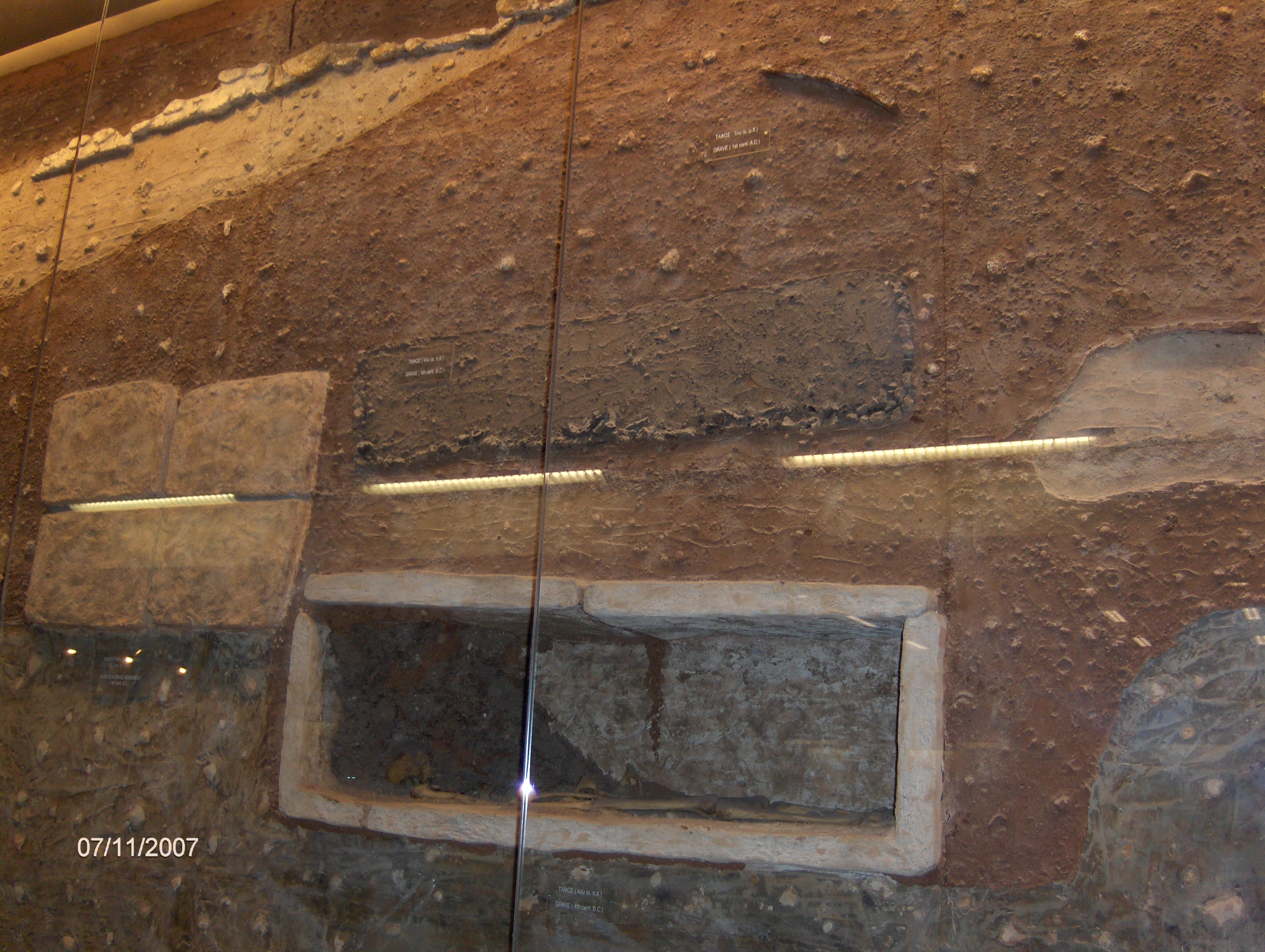
We know from the study of history, that each of the ancient cities had an acropolis, a hill crowned with temples. But all across the landscape, there are mountains. Rolling hills in the south and steep barriers in parts of the north. Many are still green with lush forests, though some have been logged and burned over the generations.HPIM0140

In every city, we feel that we are walking on history. In an Athens subway station, there is a glassed in wall which shows the layers of story that the builders dug through. And often, we turn a corner and find a hollow where archeologists uncovered someone’s home or business. We expect to see the great pillars of the Parthenon in Athens and the walls of the famous buildings, but more interesting to me are these glimpses into a distant past.

Strolling down a street or along any river feels like walking in a story. Centaurs are not myths, but creatures who walk a hill we have not been to. Gods and goddesses could return tomorrow. Who knows who you may meet around the next corner. It is the place where I found the story that I tell in Moon of the Goddess, the tale of a princess, her kidnap and her rescue.

Image


Posted in Moon of the Goddess | Tagged , , , | Comments Off on Where would you go if you could travel anywhere?

Writing takes work but it’s worth it!

When I was 16, having read Tolkien’s Lord of the Rings for the fourth time, I tried my hand at writing fantasy. A dismal failure. Way too derivative. I gave up, except for one university assignment where I successfully told the Beowulf story from the queen’s perspective.


For the next few years, I wrote a little poetry and got busy in community development work. Then, I got a job where I had to tell two stories every week. I needed to delve into old myths and let them shine light on modern everyday questions. This was really good practice (I work as a protestant minister.)


So about ten years ago, when the itch to write fantasy could no longer be resisted, I delved into the myths of Greece. I immersed myself in that world and began to tell the story of a girl who meets a centaur. Eventually I enrolled in a correspondence program in creative writing and learned how little I knew about setting a scene and narrative arc.  I revised and revised and revised. Learned a lot! That story waits in a drawer for rebirth one of these days. But I had the bug, and a bit more of the knack. I picked up another theme, the captive princess/ Helen of Troy story. Once more I plunged into the world when the gods of Olympus were young. The novel released on Wednesday, Moon of the Goddess, came to be.


This novel required two research trips to Greece, a wonderful side benefit to the choice of setting! And it took lots of revision, and some patient, helpful readers. But I enjoyed the project from start to finish. I hope you do too! (It is available as an ebook right now from Prizm Books, Amazon and Barnes and Noble.)


So, if you dream of writing, or whatever, don’t give up! The princess in Moon of the Goddess didn’t. I didn’t. Keep at it and amazing things can happen. 

Posted in The nature of story | Tagged , | Comments Off on Writing takes work but it’s worth it!

Novel Moon of the Goddess is now available

Today my novel Moon of the Goddess is available as an ebook from Prizm Books. Set in ancient Greece the story follows a kidnapped princess and her rescuers into a tangled web of ambition and danger. Conflict between an ancient earth Goddess, Eurynome and the Olympian Poseidon underlies the story. Here is an introduction to one of the rescuers, though you won’t find this particular scene in the book itself.

Panacea walked barefoot across the sand. The waves of the Gulf of Corinth lapped gently, and she let the warm water wash over her tired feet. She did not remember the last time she felt this tired.

Or this frustrated. What am I doing racing across Greece with this prince and his companion?


She knew the answer to her own question. The mother goddess had placed a bloodred moon in the sky, a warning of danger that everyone in the shrine could read. So, because she was the best rider among the goddess’s servants, she was the one chosen to join the quest of the prince Melanion to rescue his kidnapped sister.  

Panacea felt the eyes of the men on her back. They had not wanted to take her along, confident of their own power as they were. Melanion also seemed  suspicious because her father Asclepius was an Olympian god. But her father had turned to the Mother long ago, and left behind the ambitions of the gods and goddesses of Olympus. He had  taught her to follow the ancient patterns of the earth.


If only my father had left me enough connection to know what is happening! No point in wishing. He had severed those ties thoroughly, and she had no way to know what danger she rode toward at this headlong pace.

Panacea massaged her sore shoulder. Her mare Nalia kept up with the stallions of the men just fine, but as much as she loved  her white horse, neither of them had made a journey like this at speed.  Her muscles ached, and there were blisters on her thighs. The blisters she would rub with a special ointment when she returned to the fire, and they would be gone by morning. The muscles would take longer, but she knew they would get better each day.

A single wave pushed over her feet and up her ankles.  She looked down  and wondered if the rising tide was a sign. Surely it was not an omen that events would overwhelm the captured girl.

Mother, goddess of the red moon, what is the danger we race toward?

She closed her eyes and felt for the presence of the goddess. The voices of the men came toward her on the light breeze though she could not hear what they said.

The prince is so short sighted, concerned only about his sister. She corrected herself. He was focused on what had happened to her, but he also saw the danger if his city of Tiryns went to war on the city the kidnappers came from. He wanted to prevent wide spread conflict. That she appreciated. These days, most of the leaders of the cities of Greece put ambition and pride above all else. 

Panacea pushed the sound of voices aside and focused her thoughts on the goddess. Another wave lapped around her ankles, and she sensed gentle laughter, a call to open her eyes.

The edge of the  moon had risen above the water and a silver-bright arrow of light ran straight across the waves to her feet.

I have been chosen, she thought. For whatever reason, I need to make this journey. Tiredness flowed from her feet as if washed away by the moving water. The choice to join this quest had been right, and if she kept connected to the goddess, the next choice would come to her.

The words of a hymn to the goddess came to her, and she raised her arms. Singing would help her focus.  And help her sleep. She was going to need all her strength on this journey into unknown danger.


Posted in Moon of the Goddess | Tagged , | Comments Off on Novel Moon of the Goddess is now available

A blog visit from Voss Foster

Prizm Books, who are publishing my novel, have lots of great stories and novels. One of their authors is Voss Foster and here is his reflection on his just published novel Zirkura Fantastic.

When someone might die, or do the impossible, people get interested. That’s the kind of thing that circuses have always worked with. The more dangerous and extreme, the more money you can get from your audience to come and see it… and that just spreads the word further and faster. It’s a vicious circle that can make people a lot of money, used correctly. It’s why people will dust off their wallets to see fire-dancers, high wire performers, and sword swallowers, even today. It’s why there’s still interest in contortionists and Cyr wheel artists.

It’s because people want to be swept away in a fantasy. We may never really see a knight in shining armor slay a dragon, or a game of Russian roulette. To be honest, I don’t think many people really have a strong desire to see real blood and anguish.

But danger? Yes. We want to see danger and unthinkable stunts. So we go and watch someone swing three-hundred pound weights around, or stare up as people run the wheel of death. No harnesses, just the open air and gravity.

Is the danger sometimes falsified? Of course. Fake falls are fantastic for increasing audience tension. As soon as someone slips, everyone’s hearts throb and hum with nervousness. Playing a little pretend never hurt anyone.

zirkuafantastic (1)
Zirkua Fantastic has been steadily running since 1753, amazing its
patrons with acts of otherworldly skill and prowess. But that talent
comes at a steep price: each artist must give a year of his or her
life to the circus. None of them know why, only that the circus’
owners will go to whatever lengths are necessary to ensure it. Toby,
the hoop dancer at Zirkua Fantastic and son of one of the owners, is
content with his life: he enjoys performing and Zirkua’s wandering
life, and even has a boyfriend among the circus’ hawkers. But when a
new artist arrives, bringing with him a strange flask and a number of
odd occurrences, Toby falls face-first into the truth behind the
circus: Its contracts bind King Jester, the immortal embodiment of
chaos.

Zirkua’s performances and contracts have held King Jester prisoner for centuries, but now something’s amiss. King Jester’s sister, Dragon, has escaped her own bonds and is working to free her brother, and his power is growing. If he is loosed on the world, it will mean the worst
war in human history and the end of civilization… unless Zirkua Fantastic can find a way to stop him.

Excerpt:
As the caravan rambled down the interstate, Tobias rolled onto his side. The prop wagon wasn’t the most comfortable. He’d have to opt out of practice to sleep once they got the tent up. No hope for that here.

He tossed aside the air silk he’d been using as a blanket and sat up, looking around, listening to the truck’s tires thud across potholes and cracked pavement. He checked the straps holding the crates, tightened one that had loosened on the drive. “Crap.” If one came loose, others could, too. He pushed himself off his stack of crates and toppled when they hit a particularly nasty bump. “When was the last time they fixed up this road?” He dragged himself up and stumbled toward the rear door of the truck, cranking straps tighter as he went. Once he got used to the movement, he sped up, tightening down all the cargo in fifteen or twenty minutes. Only the first strap had come loose.

Wood scraped against wood. His heart beat faster, breath catching. He scanned through the truck. Nothing had moved, to his eye. “Just another bump.” Palm pressed to his chest, he tried to force his heartbeat back down to something normal. “Nothing to worry about.”

He sat back on his crates and wrapped himself in the air silk. Sleeping or not, he needed a barrier against the cold and, though he would never admit it, it left him feeling safer, more protected against whatever probably wasn’t in the truck with him. He scanned the boxes a final time, just in case he had missed something.

Still nothing out of place. Not that Tobias could see much in the dark. He tossed the silk over his head and lay down on the crates, desperate for some semblance of sleep. He sucked in a deep breath. The silk smelled like tobacco.

He heard some kind of rustling and flipped the silk back over his head. Cerulean eyes filled his gaze. The familiar, heady scent rushed into his nostrils. “Marley.”

“You sound surprised.”

“A little.” Marley lifted the silk and climbed in next to Toby, snuggling up so close his scent filled the cocoon. Nice to have you here. “I mean, this is an artist’s wagon. It’s not really the sort of thing you do.”

He chuckled, hot breath cascading over Toby’s back. “That’s not quite true.” He kissed Toby’s neck, sending a chill racing along the corded muscles. “I end up in the prop wagon most nights.”

“Do you?” He did his best to sound unfazed. In reality, he fought back warm, nervous laughter. “I’d think I would have noticed.”

“Well, you did this time.”

“So I did.” Toby scooted closer, relishing in Marley’s warmth. “And I’m very happy about it.” He leaned his head against Marley’s chest. The slight movement of the fabric wafted more of the intoxicating perfume into the space. “How much longer ’til we get to the next town, you think?”

“I’d give it an hour. Maybe a little more. If I’m any good at guessing distance.” Marley pulled Tobias even closer. “You need to get some sleep, babe.”

“Not if it’s only an hour.” He turned over and nuzzled into Marley’s shirt, staring up into bright blue eyes. “I’d still be completely useless with only an hour’s sleep.” He yawned, and then slapped Marley across the arm. “Stop being so damn warm.” The end of the sentence got muddled by a second, gaping yawn. “It’s like sleeping with a space heater.”

“You can’t blame me for being hot. In fact, I remember you thanking me profusely on more than one occasion for it.”

“Well, it’s not very helpful when I’m trying to stay awake.”

Marley chuckled. “Then get off.”

He nestled closer in response, muttering into Marley’s chest. “It’s not that unbearable.”

Marley wriggled his hand under Toby’s chin, lifted his face, kissed him. “I figured that much.”

You can buy Voss’s book using this link. Enjoy!

Posted in Uncategorized | Tagged , | Comments Off on A blog visit from Voss Foster

The story the kidnapped princess wishes for

In my novel Moon of the Goddess,  the kidnapped princess Thalassai watches the stars of Herakles’ constellation and wishes he would come to her rescue. When the kidnappers call for a story to be told, she hopes they will tell a story about one of Herakles’ successful quests. Of course, her captors would not like such a story, but here is what she wished could happen:


“Near the stars that honor our hero is the Hydra, the many headed snake that Herakles was sent to defeat. When Apollo assigned the task, the hero mounted his chariot with his nephew Iolas for the journey to the swamps of Lerna.”


Thalassai misses the next part of the story. She imagines the wind carrying the storyteller’s voice to the hero, imagines Herakles hearing his name and seeking out the one telling his story. If the hero came, he would see her plight and rescue her. When she attends to the story again, Herakles is in trouble.


“The Hydra wrapped its tail around Herakles’ foot but with a two handed swing of his sword, he smashed one of its nine heads. Screaming in pain, it squeezed his leg harder as two new heads grew from the stump. Herakles had to swing the sword as another of the Hydra’s monstrous mouths threatened him from behind. He had hardly a moment to breathe when pain shot up his leg. A giant crab dug into his ankle. He heard a laugh from Hera, his father’s wife who hated him. She cried out, ‘This little creature of mine is just an annoyance for your foot. A hero strong as you can conquer despite this creature.’ Herakles tried to kick the giant crab away but it clung tightly. He pulled his arm back and swung his sword, crashing another of the hydra’s heads and continuing to smash the shell of the crab. The crab fell away with a scream of agony, while the hydra grew two heads where the stump had been.


“Herakles wondered if it would be impossible to conquer this monster. Just then, his sword hit a rock with a spark. An idea came to him, and as he fought off another of the creature’s heads, wounding its eye, he called to his companion Iolas. ‘Start a fire. You will burn the neck as soon as I cut off the head.’ With a wide sweep of his sword, he cut off the snake’s head at its root, even though he knew two  would grow back. Iolas needed time to build up the fire.”


Thalassai’s mind drifts as the storyteller pauses for breath. She knows her brother will try to rescue her, but he needs time, too. She imagines him pacing a beach a day’s sailing behind her.


 “Finally, Herakles destroyed one head of the hydra, and Iolas jumped in to cauterized the neck. Ten more times, Herakles swung his sword to cut off a head, and Iolas burned the neck so that it could not grow another. Only the  immortal head of the  hydra remained. With a might swing, Heracles severed the last neck. The hydra’s head snarled and snapped, but with his nephew, he buried it in the ground and rolled a huge boulder on top of it. That was the end of the monster that had terrorized Lerna, the end of Herakles second labor.” 


That successful rescue is the story she wished she heard. To read what story the kidnappers chose to tell, you will have to wait for Moon of the Goddess available November 13th from Prizm Books and soon after on Amazon, Barnes and Noble  and at local bookstores.

Posted in Moon of the Goddess, Old Greek Stories retold | Tagged , , , , , | Comments Off on The story the kidnapped princess wishes for